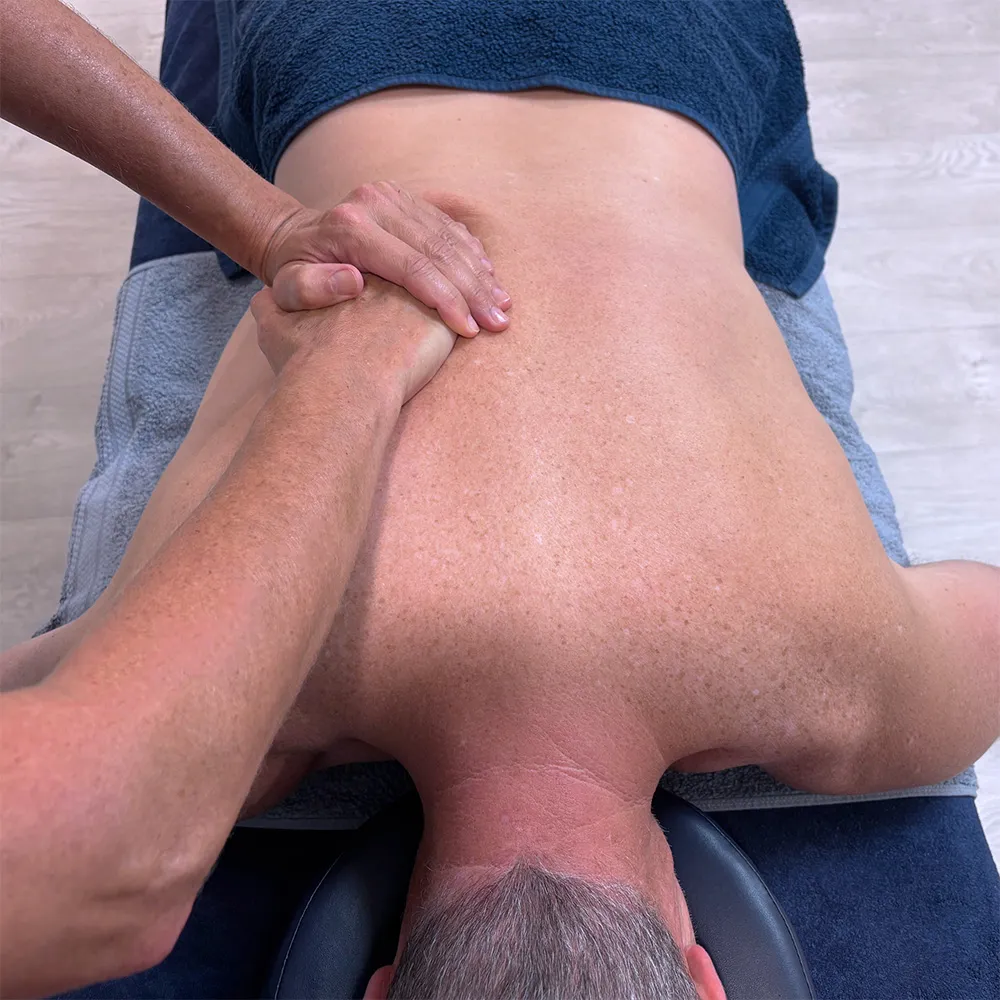
Joint mobilisation: A hands-on technique that involves the skilled application of controlled, low-velocity movements to a joint and its surrounding soft tissues.
Its primary goals are to restore normal joint mechanics, alleviate pain, reduce stiffness, and increase the functional range of motion.
Myofascial release: A hands-on technique that involves applying sustained, low-load pressure directly to the skin and underlying connective tissue (fascia). Its primary purpose is to lengthen and release restricted fascia, alleviate pain, and restore normal mobility.
Unlike traditional massage that targets specific muscle groups, myofascial release focuses on releasing restrictions across the interconnected fascial network. When normal stretching or massage hasn’t worked myofascial release can bring lasting improvement to restricted movement and help restore normal mobilty.
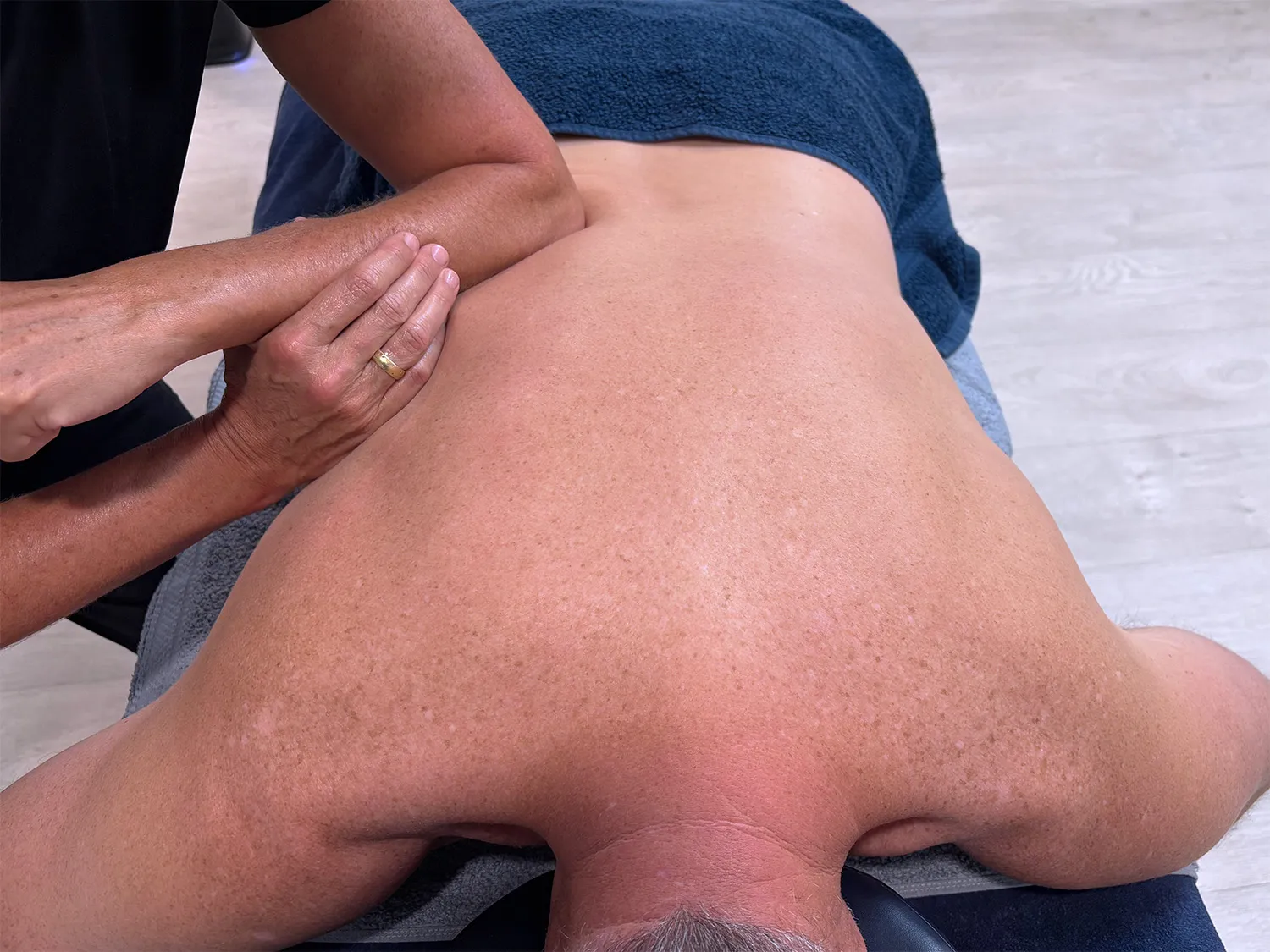
Joint mobilisation: A hands-on technique that involves the skilled application of controlled, low-velocity movements to a joint and its surrounding soft tissues.
Its primary goals are to restore normal joint mechanics, alleviate pain, reduce stiffness, and increase the functional range of motion.
Myofascial release: A hands-on technique that involves applying sustained, low-load pressure directly to the skin and underlying connective tissue (fascia). Its primary purpose is to lengthen and release restricted fascia, alleviate pain, and restore normal mobility.
Unlike traditional massage that targets specific muscle groups, myofascial release focuses on releasing restrictions across the interconnected fascial network. When normal stretching or massage hasn’t worked myofascial release can bring lasting improvement to restricted movement and help restore normal mobilty.
Muscle Energy Techniques (METs): A hands-on technique where a patient actively contracts a specific muscle from a precise position against a controlled counterforce applied by the physiotherapist. Its primary goals are to lengthen shortened muscles, mobilize restricted joints, reduce localized pain, and improve range of motion.
Trigger point release: A hands-on technique that involves applying sustained pressure, or dry needling to a hyperirritable spot within a taut band of muscle. Its primary clinical goals are to deactivate myofascial "knots," relieve local and referred pain, and restore normal muscle length. The technique works by temporarily restricting blood flow to the spot, which, upon release, prompts a rush of fresh, oxygenated blood to break the pain-spasm cycle.
Deep tissue massage: A hands-on technique that involves the application of firm strokes and deep pressure to target the sub-layers of muscle and surrounding connective tissues (fascia). Its primary clinical goals are to break down adhesions (scar tissue), reduce chronic muscle tension, and improve localized blood flow to promote soft tissue healing.
Contact
Questions? I'm here to help.

Reach out anytime for support.
I aim to reply to all emails promptly. If you don’t hear back straight away, I may be assisting another client.
bookings@kateleemingphysio.co.ukPhone
Mon–Fri, 8am–5pm
I may be with clients or away from the phone - please leave a voicemail or send a message and I’ll respond promptly.
07528 443169Location
Visit my Halifax clinic.
Free parking for 2 hours outside on Park Road. Disability parking is located directly outside the main entrance.
The King’s Centre, Park Road, Halifax, HX1 2TS
An evidence-based technique used to reduce pain, promote healing and complement rehabilitation
Read more...

A Partnership in Recovery. Bespoke rehabilitation and guided at-home training.
Read more...

We don’t just look at where you feel pain as this does not always indicate where the issue is. In a biomechanical assessment we look at your postural alignment and movement patterns i.e the mechanisms of how your body moves. This can help us to better identify the root cause of pain, injury or inefficient performance. This can make the difference between short term relief and longer lasting changes.
The findings of a biomechanical assessment can help us to make a diagnosis and guide appropriate treatment options and progressions to help you reach your optimal function.
Read more...

All Rights Reserved. Website by The Flow Group.